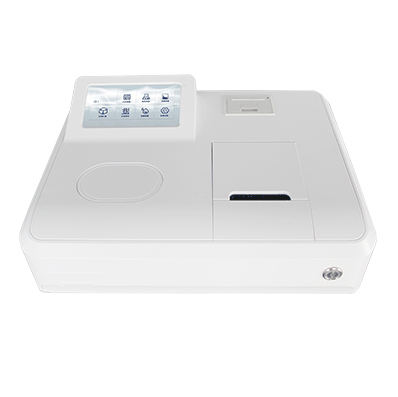
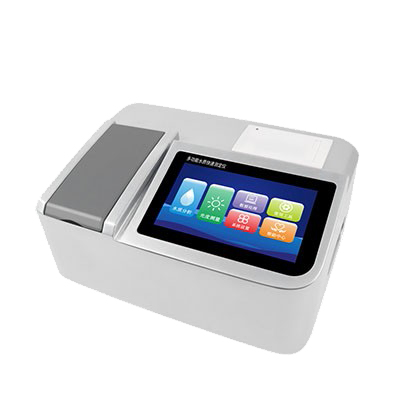
Product Overview
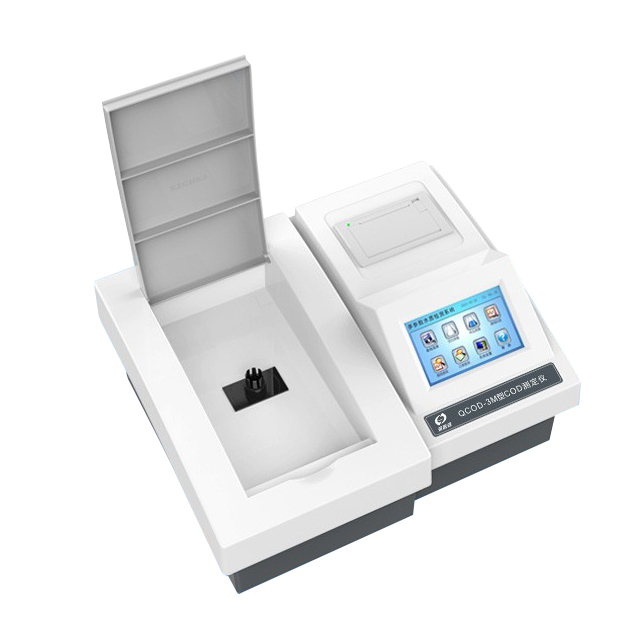
The QCOD-3M COD Rapid Analyzer was developed in accordance with **HJ/T399-2007 “Water Quality—Determination of Chemical Oxygen Demand (COD)—Rapid Digestion Spectrophotometric Method”**. It features a **separate main unit and digestion unit design**, utilizing sealed catalytic digestion followed by spectrophotometric detection of COD. The instrument employs dual-wavelength detection for both high and low concentrations, ensuring higher accuracy when analyzing low-concentration water samples. Equipped with a standalone digestion unit, the instrument eliminates the need to change test tubes between digestion and colorimetric analysis, ensuring simple operation. It is suitable for routine COD testing in laboratories and is widely used in water quality analysis applications such as environmental monitoring stations, third-party testing laboratories, wastewater treatment plants, industrial and mining enterprises, and universities and research institutes.
Principle of Operation
Potassium dichromate oxidant and silver sulfate catalyst are added to the water sample, which is then digested at a constant temperature of 165°C under sealed conditions; Organic matter is oxidized, and changes in absorbance are detected via dual-wavelength (420 nm/610 nm) spectrophotometry; the instrument’s built-in program automatically calculates the COD concentration. A built-in masking system suppresses chloride ion interference, ensuring stable testing of wastewater with high chloride content.
Key Features
1. **Modular Design**: The main photometer unit and the digestion unit are independent of each other; heat generated during digestion does not interfere with the optical system, ensuring greater long-term stability.
2. **Precise Dual-Wavelength Detection**: Different wavelengths are used for low- and high-range measurements, accommodating both low-concentration surface water and high-concentration industrial wastewater, resulting in minimal measurement error.
3. **Imported Cold Light Source System**: A narrow-band interferometric optical system ensures a long light source lifespan, with absorbance drift ≤0.002 A within 20 minutes and excellent repeatability.
4. **Dual-Unit Color Touchscreens**: Both the main unit and the digester are equipped with color touchscreens featuring English language support, an intuitive interface, and ease of use.
5. **Intelligent Temperature Control for the Digester**: Precise PID temperature control with stepless adjustment of temperature (room temperature to 200°C) and time; supports multi-point error-free temperature calibration and over-temperature power-off protection, ensuring safe and reliable digestion; processes up to 16 samples per batch.
6. **Robust Data Storage and Management**: Can store 300 calibration curves and 1,000 sets of test records; data is retained even during power outages; supports curve lookup and calibration record traceability; features a one-click restore function to prevent accidental loss of calibration curves.
7. **Comprehensive Data Output**: Built-in thermal printer for instant printing of test reports; USB interface supports data export and upload to a computer.
8. **Strong Interference Resistance**: Chlorine interference resistance up to 2,000 mg/L, suitable for testing high-salinity wastewater from chemical and textile dyeing industries.
Applications
- Laboratory COD testing of influent and effluent at wastewater treatment plants, as well as reclaimed water
- Monitoring of surface water, groundwater, and wastewater by ecological and environmental monitoring stations and third-party testing agencies
- Industrial wastewater testing in industries such as chemicals, textile printing and dyeing, electroplating, and food processing
- Water quality analysis of rivers, lakes, black and odorous water bodies, and water sources
- Water quality experiments and research projects at universities and research institutions
Summary of Product Advantages
The QCOD-3M is a split-type laboratory COD rapid analyzer. Unlike all-in-one COD devices, its optical components are unaffected by the heat generated during digestion, ensuring outstanding long-term stability. It features dual-wavelength detection, large-capacity calibration curve storage, and comprehensive safety protections, and supports an English interface, making it suitable for





 +86 15589812388
 lb045008@loobo.cn
 Jinling Industrial Park, Chengyang District, Qingdao City, Shandong Province, China