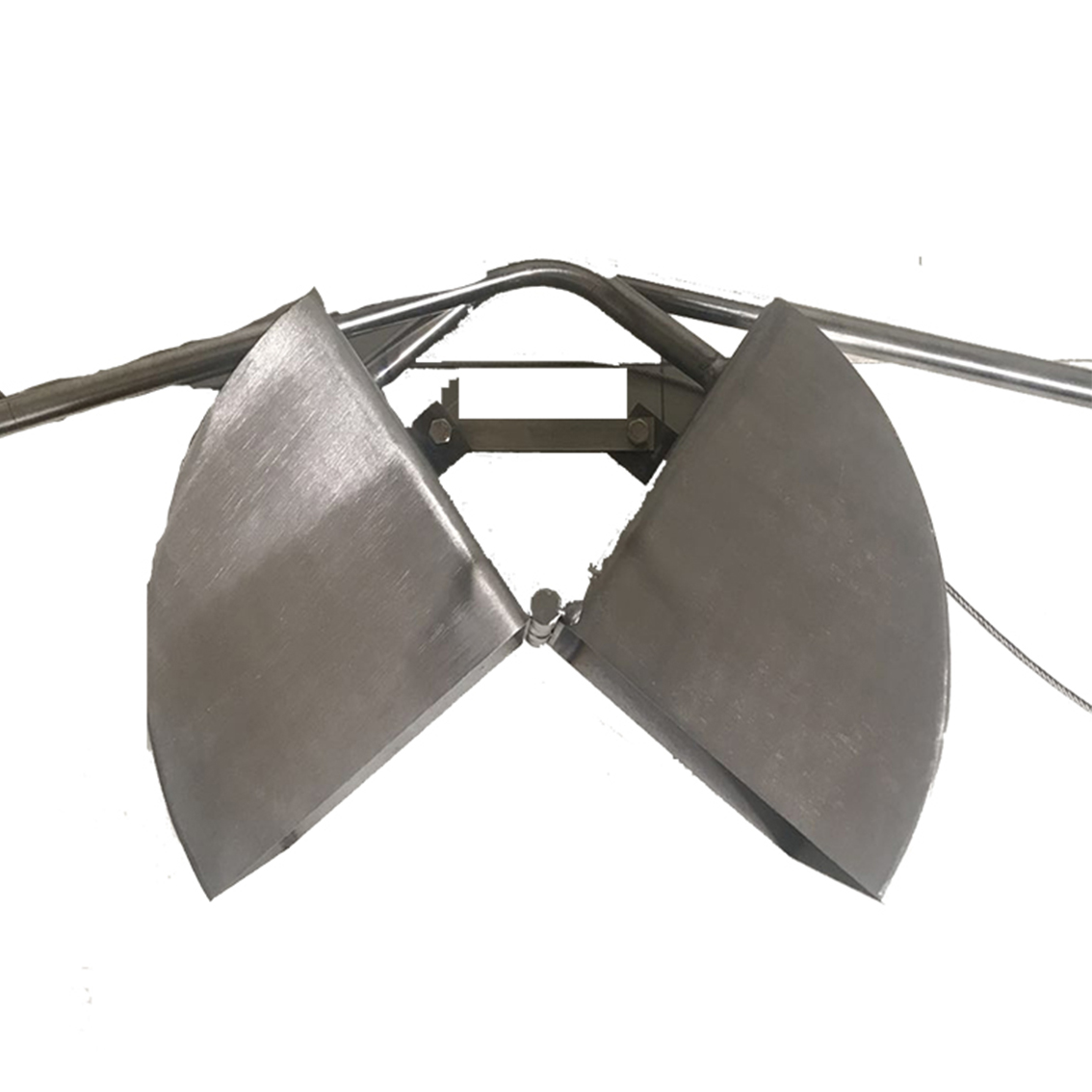
The ETC-200 Sludge Sampler (Peterson Sediment Sampler) is ** manual grab-type bottom sediment sampler**—a classic underwater sediment sampling tool in the field of environmental monitoring. It relies on its own weight to sink and is triggered by a pull rope to close and grasp bottom sediment. It is suitable for collecting sludge and bottom sediment samples from rivers, lakes, and sewage ponds in field conditions without power sources. Changzhou Yitong Branch...
Product Features
1. **Durable and Corrosion-Resistant Materials**: The main body is made of 304 stainless steel or alloy, which is resistant to sewage and mild acid/alkali corrosion, resists rust, and is suitable for long-term field use; 316 stainless steel is available as an option for highly corrosive chemical wastewater environments.
2. **Highly Representative Sampling**: The grab’s teeth interlock tightly to fully capture surface sediment, minimizing sample loss and preserving the sediment’s original state, thereby meeting sampling requirements for physicochemical, heavy metal, and organic matter testing.
3. **Simple Structure, Easy Operation**: Consists of a grab body, mechanical transmission mechanism, and load-bearing pull rope; operates entirely manually without requiring power; It sinks under its own weight; once it reaches the bottom, it is pulled up and locked in place, allowing a single person to complete the sampling operation.
4. **Easy to Clean and Maintain**: The modular design has few hard-to-reach areas, making it easy to rinse after sampling and preventing cross-contamination of samples; it is compact and portable, making it suitable for river patrols and emergency field monitoring.
5. **Flexible Sampling Depth**: The standard configuration supports depths up to 20 m; replacing the pull rope with an extended version allows for greater sampling depth, making it suitable for sampling in reservoirs, deep ponds, and deep-water rivers.
Scope of Application
Widely used by ecological and environmental monitoring stations, third-party testing companies, municipal wastewater treatment plants, as well as organizations in water conservancy, disease control, chemical engineering, and water supply sectors:
- Sampling of bottom sediment from rivers, lakes, reservoirs, and ponds
- Sludge sampling from wastewater treatment tanks and sedimentation tanks
- Water environment surveys, sediment pollution censuses, and ecological sediment monitoring
- Comparative sediment sampling at discharge outlets before and after river remediation projects
Brief Operating Procedures
1. Assemble the grab, open the bucket, and secure it by engaging the latch;
2. Slowly lower the sampler to the riverbed;
3. Once the sampler touches the bottom, gently release the rope to disengage the latch;
4. Quickly pull the rope upward; the grab will automatically close to collect the sludge;
5. Retrieve the sampler, open the grab to remove the sediment sample, and clean the equipment for future use.
Standard Configuration
Sampling grab body, specialized high-strength nylon pull rope (an aluminum carrying case is available as an optional accessory upon request)





 +86 15589812388
 lb045008@loobo.cn
 Jinling Industrial Park, Chengyang District, Qingdao City, Shandong Province, China


